
Need cash and own a motorhome, travel trailer, fifth wheel or camper? An RV title loan lets you borrow against your recreational vehicle and keep using it. RV title loans, also called RV loans or RV financing against a title, are secured by the RV’s title, so many RV title lenders look at your equity and income first.
This guide explains how RV title loans work, who qualifies, what they cost and what the risks are. TFC Title Loans is a title loan broker in Los Angeles, California. We help you compare licensed lenders and apply online or by phone at 844-242-3543. You can also read our guide to how title loans work.
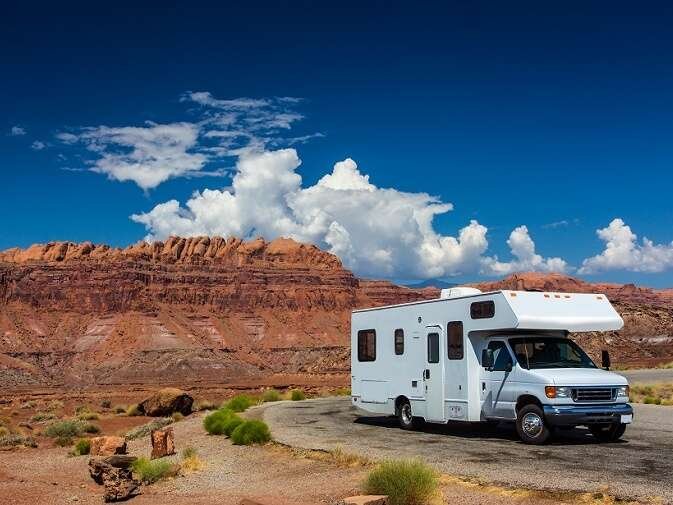
What Is an RV Title Loan? RV Loans and Motorhome Title Loans Explained

An RV title loan is a secured loan that uses your recreational vehicle’s title as collateral. Many lenders focus on the equity in your RV, its condition and your income, though some still check your credit. The loan can cover a motorhome, a travel trailer, a fifth wheel or a camper. See the basics in our complete title loans guide.
Because the loan is secured by the RV’s title:
- Bad credit or no credit may still be workable, but many lenders still check credit
- Approval can be faster than with a traditional bank RV loan
- You can continue using your RV during the loan term
- The lender holds a lien on the title until you repay
RV title loans are commonly used for emergencies, unexpected expenses, medical bills, or short-term financial gaps.
How Do RV Title Loans Work?
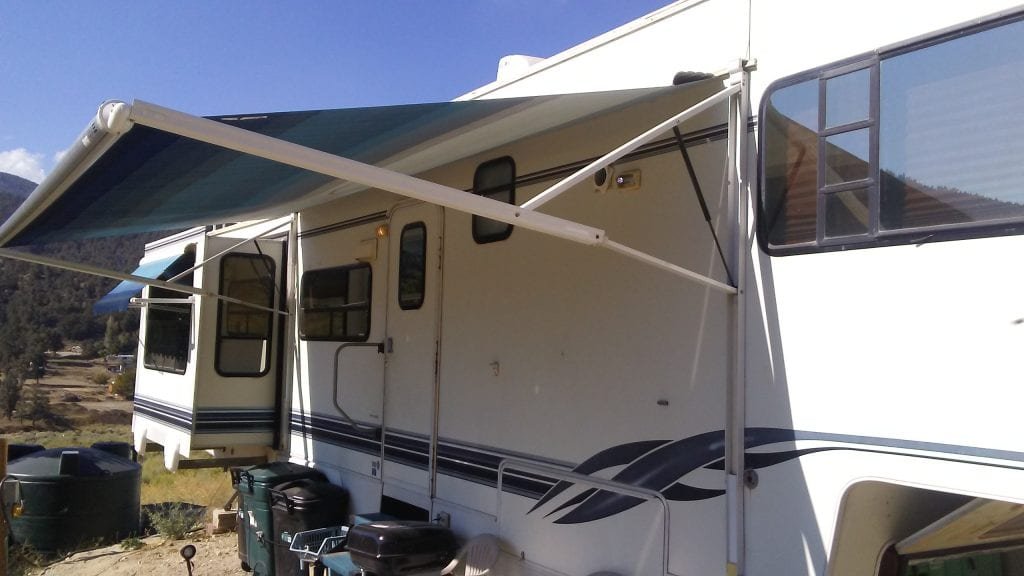
The RV title loan process is straightforward:
1. Apply for RV Title Loans Online or In Person
Start by completing a short application online or with a representative. You’ll provide basic information about your RV, income, and location.
2. RV Appraisal and Valuation
Your RV is evaluated based on:
- Make, model, and year
- Condition and mileage
- Market value and existing equity
Loan amounts are typically based on a percentage of the RV’s value.
3. Submit the Documents RV Title Lenders Require
Most lenders require:
- A clear or partially paid-off RV title
- Government-issued ID
- Proof of income
- Proof of insurance
- Proof of residency
4. Approval and Funding for RV Title Loans
Once approved, funds are often available the same day or within 24-hours, depending on the lender.
Why Choose TFC Title Loans for RV Loans and RV Financing?

TFC Title Loans works as a title loan broker, not a direct lender. This allows us to match you with the lender best suited to your situation.
Why borrowers choose us:
- Access to a large nationwide lender network
- Licensed lenders that follow state and federal rules
- Quick comparisons and flexible terms
- Options for bad credit borrowers, subject to lender review
We do the comparison work so you don’t have to.
Benefits of RV Title Loans

- Fast access to cash: many borrowers hear back within hours
- Credit is only one factor: lenders focus on RV equity and income, though many still check credit
- Keep using your RV: you do not have to park it or give it up
- Flexible repayment options: monthly payments are available with many lenders
- Larger loan amounts: an RV is often worth more than a car, so loan amounts can be higher
Eligibility Requirements for RV Title Loans

To qualify, you typically need:
- Ownership of an RV or motorhome
- A clear or partially paid-off title
- Proof of steady income
- Valid government-issued ID
- Active RV insurance
- U.S. residency
Requirements may vary by lender and state.
RV Title Loan Repayment Terms

RV title loans usually offer:
- Monthly repayment schedules
- Loan terms ranging from a few months to longer options
- A prepayment penalty with some lenders and none with others, so ask first
Making payments on time is essential. Failure to repay may result in repossession of the RV.
RV Title Loan Risks and Important Considerations

Before applying, consider the following:
- Higher Interest Rates – Secured loans often cost more than traditional bank loans
- Risk of Repossession – Defaulting can result in loss of your RV
- Shorter Loan Terms – Ensure payments fit your budget
RV title loans are best used as short- to medium-term solutions, not long-term financing.
RV Title Loan Refinancing Options

If you already have an RV title loan, refinancing may help you:
- Lower your monthly payment
- Reduce your interest rate
- Extend your loan term
- Access additional cash if equity remains
TFC Title Loans can help refinance existing RV title loans, even if your current loan is with another company.
Other Title Loan Options: Travel Trailer, Camper, Mobile Home and Car Title Loans

If an RV title loan isn’t the right fit, you may qualify for other options:
- Car Title Loans – For cars, SUVs and trucks
- Motorcycle Title Loans – For street bikes and cruisers
- Camper Title Loans – For towable campers, travel trailers and fifth wheels
- Mobile Home Title Loans – For manufactured and mobile homes
- Boat Title Loans – For boats and personal watercraft
- Title Loan Refinancing – Lower payments or better terms
- Title Pawn – Pawn your title
Each loan type has its own requirements and benefits.
Frequently Asked Questions About RV Title Loans

Please visit our FAQ page for more information.
How much can I borrow with an RV title loan?
Loan amounts depend on the RV’s value and available equity. Many borrowers qualify for thousands of dollars.
Can I get an RV title loan with bad credit?
Often, yes. Many lenders focus on RV equity and income, though many still check credit. A lower score may mean a higher rate.
Can I get a loan if my RV isn’t fully paid off?
Yes. As long as there is sufficient equity remaining, you may still qualify.
How fast can I get funded with an RV title loan?
Some borrowers receive funds the same day or within 24 hours. Timing depends on the lender, your documents and your bank.
Do I keep my RV during the loan?
Yes. You continue using your RV while repaying the loan.
Final Thoughts: RV Title Loans Made Simple

An RV title loan can provide fast financial relief when traditional lending options aren’t available. With competitive lender options, flexible terms, and quick approvals, TFC Title Loans makes the process simple and transparent.
If you need quick cash and own an RV, motorhome, or travel trailer, applying online is fast and easy.
Apply today and see how much you can qualify for.
How Much Can You Borrow With an RV Title Loan?

The amount you can borrow depends on your RV’s value, your income and the rules in your state. Loans often start at $250 or $500 and can reach many thousands of dollars on a valuable motorhome.
Many title lenders offer roughly 25 to 50 percent of a vehicle’s wholesale value. Some lenders offer more, and some offer less. There is usually a minimum and a maximum loan amount.
Lenders look at the year, make, model, mileage, condition and equity in your RV. A late-model Class A diesel pusher in good shape is usually worth more than an older travel trailer with water damage.
Get a realistic value before you apply. Kelley Blue Book lists RV values, and lenders often use wholesale values, which are lower than a dealer’s asking price. Our title loan calculator helps you estimate payments.
What raises or lowers your RV title loan amount
- A newer model year and lower mileage
- A popular brand with strong resale value
- A clean title with no other liens
- Good condition inside and out, with no roof or slide-out damage
- Steady income that covers the payment
- State limits on loan size or rates
RV Title Loan Rates, Fees and Terms

RV title loans usually cost more than bank, credit union or RV purchase loans. The annual percentage rate (APR) shows the yearly cost of the loan, including interest and most fees.
Some title loans are due in one payment after about 30 days. Others are installment loans with monthly payments over several months or years. Terms depend on the lender and the state.
Common fees include processing fees, lien recording fees, late fees and returned-payment fees. Ask whether there is a prepayment penalty and whether the lender charges a fee to release the lien.
In California, title lenders must be licensed by the DFPI. Read California title loan rates and fees and California title loan laws, and get the APR in writing.
Questions to ask about your RV title loan
- What is the APR and the total finance charge?
- What is the total amount I will repay?
- Is the loan a single payment or installments?
- Is there a fee to pay early?
- How many days late is a default?
RV Title Loan Example: What a Loan Might Cost

Numbers make the cost easier to see. This example is for illustration only. It is not an offer, and your rate and terms could be different.
Say your motorhome has a wholesale value of $40,000 and you borrow $10,000. That is 25 percent of the RV’s value.
At a 36 percent APR repaid over 12 months, the payment would be about $1,005 a month. You would repay about $12,055 in total, so the finance charge would be about $2,055.
Stretch the same loan to 24 months and the payment drops to about $590 a month. However, the total repaid rises to about $14,171, and the finance charge grows to about $4,171.
A longer term gives you a lower payment, but you pay more overall. Choose the shortest term your budget can handle, and pay early if your lender allows it without a penalty.
| Example | 12 months | 24 months |
|---|---|---|
| Amount borrowed | $10,000 | $10,000 |
| APR | 36% | 36% |
| Monthly payment | About $1,005 | About $590 |
| Total repaid | About $12,055 | About $14,171 |
| Finance charge | About $2,055 | About $4,171 |
RV Types That Qualify for Title Loans: Motorhomes, Travel Trailers, Fifth Wheels and Campers

What types of RVs can you use for an RV loan? Most lenders accept any RV that has a title, is in your name and is in working condition.
Learn about the main types on Wikipedia’s recreational vehicle page. Our camper title loans page covers towable units in more detail.
| RV type | What it is | Title loan notes |
|---|---|---|
| Class A motorhome | Large bus-style coach built on a commercial chassis | Often the highest values and largest loan amounts |
| Class B camper van | Compact van conversion with a small living area | Valued like a van; condition and mileage matter |
| Class C motorhome | Mid-size motorhome with a cab-over sleeping area | Popular and easy to value |
| Travel trailer | Towable trailer pulled by a truck or SUV | Needs a title in your name; lower values than motorized RVs |
| Fifth wheel | Towable that hooks to a hitch in a truck bed | Often high value; check the lender’s towable policy |
| Toy hauler | RV with a garage area for bikes or ATVs | Accepted by many lenders when the title is clear |
| Pop-up and truck camper | Light folding or truck-bed campers | Lower values; some lenders skip them |
| Airstream and vintage trailers | Classic aluminum trailers | Value depends on condition and originality |
Some states do not title every trailer, so check with the California DMV to see how your RV is registered. If your RV is a tiny camper without a title, a title loan may not be possible.
Older RVs, high mileage and project campers
People often ask whether a 20-year-old RV can qualify. It can, but its value is lower, so the loan is smaller. Lenders may also ask for photos of the roof, tires and engine.
A camper that does not run or has serious water damage may not qualify. Fix urgent problems first, because condition drives value.
RV Title Loans vs. RV Financing, Credit Union and Bank Loans

How does RV financing compare with other payment options? The main difference is the purpose. RV financing, such as a dealer or bank RV loan, pays for the purchase of a new or used RV. An RV title loan lends against an RV you already own.
| Option | How it works | Main trade-off |
|---|---|---|
| RV title loan | Secured by an RV you own; you keep using it | Higher cost; the RV is at risk |
| Bank RV loan | Finance a new or used RV; the RV secures the loan | Usually needs good credit; only for buying |
| Credit union RV loan | Member-owned lenders often offer lower rates | Membership rules and slower approval |
| Dealer RV financing | Finance through the RV dealer | Rates vary; add-ons can raise the cost |
| Personal loan | Unsecured loan with fixed payments | Higher rates with weak credit |
| Home equity loan | Borrow against your home | Your home is at risk |
| Credit card or cash advance | Quick money on a card you already hold | Very high rates and fees |
What are the benefits of a credit union RV loan? Credit unions are nonprofit and often charge lower rates than banks or title lenders. Find one near you with the NCUA credit union locator and learn more at NCUA.gov.
Compare these options first if you can wait. You can also read our guides to title loan alternatives and alternatives to a vehicle title loan.
Will applying affect my credit?
Will applying for Airstream financing in San Diego affect my credit? It can. A bank or credit union RV loan usually involves a hard credit inquiry, which can lower your score for a short time. Some title lenders use a soft check or none, but others do a full check.
Ask before you apply. You can also pull your free reports at AnnualCreditReport.com to see what lenders will see.
Used RV Financing and Refinancing an Existing RV Loan

Do banks and credit unions offer financing for used RVs? Yes, many do. Most set limits on the age of the RV, and older units may need a larger down payment or a shorter term.
Can you use an RV loan to refinance an existing loan? Yes. A new lender pays off the old loan and you make payments to the new one. This can help when rates have dropped or your credit has improved.
If your current loan is a title loan, a refinance can lower the payment or move you to a better lender. Read about title loan refinancing and compare car equity loans too.
Equity, depreciation and what you still owe
RVs often lose value quickly, especially new ones. Read about depreciation so you know why your RV may be worth less than you owe.
If you owe more than the RV is worth, a title loan or refinance may not be possible. Get a payoff letter from your lender to see your balance.
How to Apply for RV Title Loans Step by Step

Step 1: Get a free quote
Start on our website or call 844-242-3543. You share your name, phone number, ZIP code and basic details about the RV. A free quote does not commit you to anything.
Step 2: Share photos and paperwork
The lender asks for photos of the RV’s exterior, interior and odometer, plus the VIN plate. You also provide your title, ID, proof of income and proof of insurance. Clear photos help the lender value the RV without an in-person visit.
Step 3: Review the offer
The lender sends an offer with the loan amount, APR, payment schedule and total cost. Read every line and make sure you understand what happens if a payment is late.
Step 4: Sign and get your money
Once you accept, the lender records its lien and sends the funds. Many customers receive money by direct deposit within about 24 hours.
Step 5: Repay and get your title back
Make each payment on time and keep your RV insurance active. When the balance reaches zero, the lender releases the lien and the title is yours again.
RV Title Loans Near Me in Los Angeles, San Diego and California

TFC Title Loans has been based in Los Angeles, California since 1994. We help RV owners across Los Angeles County, San Diego, San Francisco, Bakersfield and the rest of the state compare RV title loans.
Drivers in Long Beach, Anaheim, Riverside, Bakersfield and Irvine can apply online and finish most steps without an office visit.
See our page on car title loans and our California title loans guide for local rules.
California registration, storage and camping season
Your RV’s registration must be current in California. Learn about titles at the California DMV.
California’s coast, deserts and mountains draw campers all year. Plan trips with Visit California, the National Park Service and Recreation.gov.
Many owners store their RV for part of the year. Storage costs can add up, so include them in your budget before you borrow.
Read more about California title loan requirements.
RV title loans in Los Angeles, California: what to bring
- A California RV title in your name
- A valid driver’s license and proof of address
- Proof of income, such as pay stubs or bank statements
- Current registration and RV insurance
- See all California title loan requirements
Paying Off Your RV Title Loan and Getting Your Title Back

Paying early is one of the best ways to cut the cost of a title loan. Interest builds over time, so a shorter loan usually costs less.
Before you pay early, ask for a payoff quote that shows the exact amount due on a given date. Ask whether there is a prepayment penalty.
After your last payment, the lender releases its lien. Keep your final receipt and the lien release in a safe place.
If you do not receive your title or lien release within a few weeks, contact the lender. If the problem continues, contact the DMV or your state regulator.
What Happens If You Cannot Repay an RV Title Loan?

A missed payment usually adds a late fee. If you keep missing payments, the loan can go into default.
In default, the lender may repossess the RV. Losing your RV can mean losing your vacation home, or in some cases your home on wheels, so the risk is serious.
If the RV sells for less than you owed, some states let the lender collect the rest. Others do not. Check your contract and your state’s rules.
Call your lender before a payment is late. Many lenders offer a new due date, a smaller payment for a short time or a refinance.
Learn more about what happens if you default on a title loan and your rights in title loans and repossession.
RV Title Loan Mistakes to Avoid

- Borrowing the most you can instead of what you need
- Comparing only the payment, not the total cost
- Rolling the loan over again and again
- Letting your RV insurance lapse
- Signing before reading the whole contract
- Ignoring calls or letters from the lender
Plan your payments around your tightest month, not your best one. That is the best way to keep your RV.
Protect Your RV While You Repay

Your RV is the collateral, so keeping it in good shape protects both you and the loan. Damage, theft or a breakdown does not cancel what you owe.
Most lenders require full coverage on the RV for the life of the loan. Learn coverage basics at the Insurance Information Institute.
Keep up with maintenance, such as roof seals, tires, brakes and the engine. Tire age and condition matter on every RV, and the RV Industry Association shares RV safety and ownership tips.
Build a small cash reserve, even a few hundred dollars a month, so one repair does not force you back into a loan.
Red Flags When Choosing RV Title Lenders

Most licensed lenders follow the rules, but it pays to know the warning signs. Walk away if a lender does any of the following:
- Asks for a fee before the loan is approved
- Will not show the APR or total cost in writing
- Asks you to sign a contract with blank spaces
- Pressures you to decide in minutes
- Cannot give a state license number
Read reviews from real customers before you apply. Sites such as ConsumerAffairs and the Better Business Bureau show how a lender treats people after the loan is signed.
Lenders in the Online Lenders Alliance (OLA) agree to follow its code of conduct. You can also look up a lender’s license on NMLS Consumer Access.
Your Data, Privacy and Security When You Apply

A title loan application includes personal information such as your ID, income and bank details. Protect that data.
Only apply on a secure website that starts with https. Never send photos of your ID or title by social media message.
Please read our privacy policy and terms and conditions to see how we collect, use and protect your information.
If someone claiming to be a lender asks for a gift card or a card number, do not respond. Report it to the CFPB or your state regulator.
RV Title Loan Terms Explained

RV owners and lenders use many names for the same product. Here is what the common terms mean.
RV Title Loans
RV title loans, RV loans and RV title loan: loans secured by the title of a recreational vehicle. You keep driving the RV, and the lender holds a lien.
Motorhome title loans, camper title loans and travel trailer title loans: other names for the same product, depending on the type of RV.
RV title lender and title lender: the licensed company that lends against the title.
RV financing, financing loan and finance: terms for money lent against or to buy an RV. Ask whether you are being offered a title loan or a purchase loan.
Used RV financing and refinance: a loan for a pre-owned RV, or a new loan that replaces an existing one.
Title lending and lending loan: the business of lending against vehicle titles.
Same day title loans, fast title loans and emergency title loans: marketing phrases for quick funding. Speed depends on the lender and your documents.
RV loan amount, rates, options and service: the details to compare between lenders.
RVT: a short form some people use for RV title loans. Always read the full loan contract.
RV Title Loans: requirements, costs, and borrower checklist
This section expands the borrower guidance for RV title loans so applicants can compare eligibility, documentation, repayment risk, and alternatives before submitting a request. TFC Title Loans may connect applicants with partner lenders or service providers. Approval, loan amount, rates, fees, funding time, and repayment terms vary by lender, applicant, vehicle, title status, and state requirements.
Editorial and compliance note: This product guide was reviewed on June 23, 2026. It is educational information, not a loan offer or guarantee of approval. Always review the lender disclosures, APR, finance charge, payment schedule, default terms, and total repayment amount before signing.
What RV title lenders may review
| Review area | Why it matters | What to prepare |
|---|---|---|
| RV title, model details, mileage, condition, and equity | Helps estimate collateral value and available equity. | Year, make, model, mileage, condition, photos, registration, title, or payoff details if requested. |
| Identity and contact details | Used for applicant verification and communication. | Government ID, current address, phone number, and email. |
| Title or ownership status | Shows whether the asset can be used as collateral. | Title in your name, lienholder details, or payoff information if another lien exists. |
| Income or ability to repay | Lenders may review whether repayment appears manageable. | Pay stubs, bank statements, benefit statements, business income records, or another accepted proof source. |
When this product may or may not fit
An RV title loan may fit borrowers who own a recreational vehicle with usable equity and need to compare a secured funding option.
This may not fit borrowers who rely on the RV for housing, travel, or work and cannot comfortably manage the repayment schedule. Because this type of borrowing is secured by an asset, missed payments can create serious consequences, including default and possible loss of the collateral depending on the agreement and applicable law.
Costs and repayment questions to compare
- What is the APR and total finance charge?
- What is the total repayment amount if every payment is made as scheduled?
- Are there processing, lien, title, late, returned-payment, or payoff fees?
- How long is the repayment term, and when are payments due?
- What happens if a payment is late or missed?
- Can the loan be paid off early, and does early payoff change the total cost?
Safer comparisons before applying
RV values can vary widely by condition, mileage, age, and market demand, so collateral value and loan amount are not guaranteed. Compare lower-risk options first when available, including credit union loans, payment plans, employer advances, hardship programs, family support, or selling unused items. If you continue with a title-secured product, borrow only what you can reasonably repay and keep copies of every disclosure.
RV title loans: state and local availability
Title-secured lending rules vary by state. Use the state guides and local pages below to compare requirements, availability, and borrower considerations in your area.
- California title loans
- Alabama title loans
- Arizona title loans
- Florida title loans
- Georgia title loans
- Illinois title loans
- Indiana title loans
- Kentucky title loans
- Michigan title loans
- Mississippi title loans
- Ohio title loans
- Tennessee title loans
- Texas title loans
- Virginia title loans
Related title loan resources
- Car title loans
- Online title loans
- Pink slip loans
- Title loan refinancing
- Car equity loans
- Title loan calculator
- Title loan locations
- Apply for a title loan
RV title loan questions
Can I start the request online?
Yes. You can start with an online request, but additional documentation, lender review, vehicle or asset verification, and approval steps may still be required.
Does approval depend only on credit?
No. Credit may be reviewed, but lenders may also consider collateral value, equity, title status, income, state rules, and the ability to repay.
What should I read before signing?
Read the APR, finance charge, fees, payment schedule, total repayment amount, default terms, repossession or collateral provisions, and payoff rules before accepting any offer.
How to compare RV title loans with other options
Before choosing RV title loans, compare the product against unsecured personal loans, credit union small-dollar loans, payment extensions, hardship programs, employer advances, and selling an unused vehicle or asset. A title-secured product may be faster to request, but speed should not be the only decision factor. The most important comparison is the total repayment amount, including interest, finance charges, fees, and any cost that applies if a payment is late or returned.
Borrowers should also compare what happens if the plan does not go perfectly. Ask whether the lender offers payment reminders, grace periods, early payoff options, refinancing, extensions, or hardship communication channels. A lower payment can still be expensive if the loan runs longer than expected, and a larger loan amount can create more pressure if income changes during the repayment period.
| Comparison point | Question to ask | Why it matters |
|---|---|---|
| Total cost | What will I repay in dollars, not just APR? | Shows the practical cost of the loan. |
| Payment schedule | Are payments weekly, biweekly, monthly, or due in one lump sum? | Helps match the loan to income timing. |
| Collateral risk | What can happen to the vehicle or asset after default? | Clarifies the most serious downside. |
| Early payoff | Can I pay early, and are there fees or savings? | Shows whether fast repayment can reduce cost. |
| Alternatives | Have I checked lower-risk borrowing or payment-plan options? | Prevents using a secured product when a safer option exists. |
Decision checklist before submitting a request
- Confirm the title, registration, or ownership documents are accurate and in your name where required.
- Estimate a payment amount that leaves room for rent, utilities, insurance, fuel, food, and other essentials.
- Read the APR, finance charge, fees, due dates, late-payment rules, and default language before signing.
- Keep a copy of all disclosures, the repayment schedule, and lender contact information.
- Use the smallest amount that solves the immediate need instead of borrowing the maximum offered.
More RV Title Loan Questions
Can I keep using my RV during the loan?
Yes. With a title loan the lender holds a lien on the title, not the RV, so you keep using it while you repay.
Can I get an RV title loan if I still owe on the RV?
Sometimes. You need equity, meaning the RV is worth more than you owe. Many lenders want a clear title, so ask before you apply.
Can I get a travel trailer title loan?
Yes, in many cases. A travel trailer with a clear title in your name can secure a loan. See our camper title loans page.
Can I get an RV title loan in Los Angeles, California?
Yes. TFC Title Loans helps RV owners in Los Angeles and across California compare RV title loans from licensed lenders.
Can I use an RV title loan to buy another RV?
Some borrowers do, but compare it with RV financing first. A purchase loan is usually cheaper.
What happens to my RV title when I pay off the loan?
The lender releases the lien. You receive the title back or a lien release, depending on how your state records titles.
Quick answers about RV title loans
RV title loans: quick answers
Tap any question below to see the answer.
What is the minimum credit score for an RV title loan?
Most RV title lenders do not set a high minimum credit score. They look at the RV’s value and your income first. A higher score may help you get a lower rate.
How does RV financing compare with other payment options?
RV financing for a purchase usually costs less and runs longer than a title loan. A title loan is quicker and works with weaker credit, but costs more.
What types of RVs can I finance with an RV loan?
Motorhomes (Class A, B and C), travel trailers, fifth wheels, toy haulers and campers can qualify when the title is clear and in your name.
Can I use an RV loan to refinance an existing loan?
Yes. A new lender can pay off your old loan. Compare the APR and fees before you switch.
Do banks and credit unions offer financing for used RVs?
Many do, often with limits on the RV’s age and mileage. Compare them with a title loan before you decide.
Are title loans legal in Los Angeles, California?
Yes. Title loans are legal in California. Lenders must be licensed by the DFPI.
How quickly can I receive money from an RV title loan?
Many borrowers get funds in about 24 hours after approval. Timing depends on the lender and your bank.
Does the RV title need to be in my name?
Yes. The title must be in your name. If it lists a co-owner, that person may need to sign too.
Do I need to bring my RV to an office?
Often not. Many lenders accept photos and a video call, so you can apply from the campground or from home.
RV Title Loans by State

Each state sets its own rules for title loans, including licensing, rate limits and repossession. Pick your state below.
RV title loans in your state: choose a state guide
RV Title Loans in California Cities

RV title loans in Los Angeles, CA and nearby California cities
RV Title Loan Guides

State Financial Regulators for RV Title Loans

Before you sign, check that your lender is licensed in your state. These state agencies license and oversee lenders:
RV Title Loan Sources and Resources

These independent resources cover RVs, loans, consumer rights and credit:
- RV Industry Association
- Recreation.gov: campgrounds and permits
- National Park Service
- Visit California
- California DMV: titles
- Kelley Blue Book: RV values
- SBA: small business loans
- NCUA: credit union locator
- Insurance Information Institute
- CFPB: auto loans
- California DFPI: file a complaint
- NFCC: nonprofit credit counseling
- AnnualCreditReport.com: free credit reports
- Wikipedia: recreational vehicle
- Wikipedia: motorhome
- Wikipedia: travel trailer
- Wikipedia: fifth-wheel coupling
- Wikipedia: Airstream
- Wikipedia: title loan
- Wikipedia: secured loan
- Wikipedia: lien
- Wikipedia: annual percentage rate
- Wikipedia: credit union
RV title loans: get your free quote
Related searches: